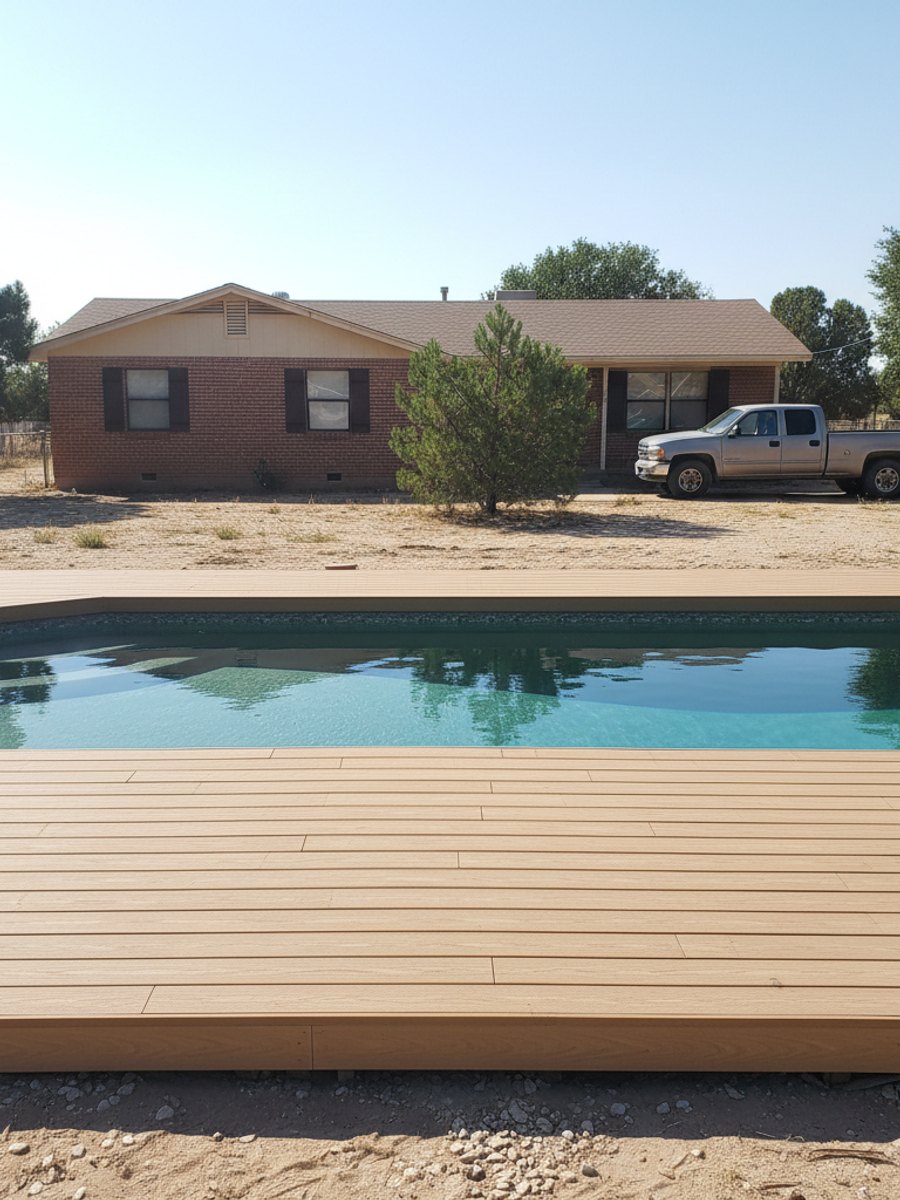
Chaparral sits in the Chihuahuan Desert, and the ground and weather here don't behave like they do two states over. A deck built the way someone would build it in Ohio or even Albuquerque can run into trouble within a year or two. Before you sign a contract or start digging post holes yourself, here's what actually matters out here.
What's under your yard before you dig
Most lots around Chaparral have a layer of caliche somewhere between 6 inches and 3 feet down. It's a hardened calcium carbonate layer, basically cemented soil, and a hand auger will stop dead when it hits it. A post hole that was supposed to take twenty minutes can take two hours with a gas auger or a bar and a lot of sweat. Know this going in, because it changes how a crew prices footing work and how deep they can realistically get without power equipment.
Call 811 before anyone digs, even on a lot that's been empty for years. Buried electrical, gas or irrigation lines don't show up until a shovel finds them, and that's an expensive way to find out.
Where the water goes when it rains
Chaparral doesn't get much rain most of the year, but the monsoon season from July through September can dump an inch or more in under an hour. There are no curbs or storm drains on most streets here, so water moves across the land the way it always has, and a deck built right in that path will sit in standing water after every storm. Footings poured in soil that stays saturated even for a day or two can shift over a few seasons. Before footing locations get marked, walk the yard after a hard rain if you can, or ask the builder to check the grading and tell you which way water actually runs.
What the sun and wind do to the materials
Summer surface temperatures on dark composite decking here can hit 150 to 160 degrees in direct July sun. Barefoot, that's not comfortable, and it's worth asking about lighter colors or capped composite boards if the deck faces south or west with no shade. Pressure-treated pine fades and checks fast under this much UV, so staining and sealing on a wood deck isn't optional maintenance, it's closer to every one to two years depending on sun exposure.
Wind matters more than people expect. Spring brings sustained gusts of 40 to 50 mph with dust blowing sideways, and any pergola or deck cover needs post connections rated for uplift, not just downward load. A cover that was fine in a calm fall install can rack or lift a corner the first windy March it goes through if the hardware is undersized.
Permits, setbacks, and what gets inspected
Chaparral is unincorporated, so building permits for a new deck or an attached structure go through Doña Ana County, not a city office. The county generally wants to see footing depth and spacing before concrete goes in, and framing before any decking boards cover it up. If your deck is attached to the house, expect a ledger inspection too, since that connection is where most structural failures start.
Setbacks are worth checking even on a deck, especially near property lines, septic systems, or a well. A lot of lots out here are larger and semi-rural, which is nice for building room but also means there's often a septic tank or leach field somewhere in the yard that a footing plan needs to avoid. An HOA is less common here than in a planned subdivision closer to Las Cruces, but if your street has one, read the covenant before you pick a railing style or stain color, not after.
What's already attached to your house
A lot of the housing in and around Chaparral is manufactured or modular, built from the 1970s through the 1990s, with site-built homes mixed in on newer parcels. Attaching a ledger board to manufactured home framing is not the same job as attaching one to a stick-built house with standard floor joists. Sometimes the right answer is a freestanding deck with its own posts and beams instead of one bolted to the house, and a builder who's worked this area will know which one your home needs before they ever pull a permit.
If you're resurfacing or repairing an existing deck rather than starting from scratch, check the ledger flashing first. Flashing that was never installed, or that's rusted through, lets water run behind the board and rot the house framing it's attached to. New decking on top of a rotten ledger connection looks fine for about a season.
A few more worth a quick look
- Post footing depth should generally go below the active zone of soil expansion and contraction, often 12 to 18 inches locally, not just the bare minimum that holds a post upright.
- Ask what fastener grade is going into pressure-treated lumber. Standard galvanized screws corrode fast in treated wood, and the wrong fastener shows up as rust streaks within a year.
- If the deck will see a lot of direct sun with no cover, composite decking generally holds up longer than untreated wood here, though it costs more up front.
- Get it in writing whether the quote includes the permit application and the inspection visits, or whether that's on you.
None of this is complicated, but it's specific to this ground and this climate, and it's the kind of thing that only shows up after the first monsoon or the first hard freeze if nobody checked it beforehand. We've built and repaired decks all over Chaparral and the surrounding area, and if you want a second set of eyes on a plan before you commit to it, Champion Deck Company is happy to walk the yard with you.