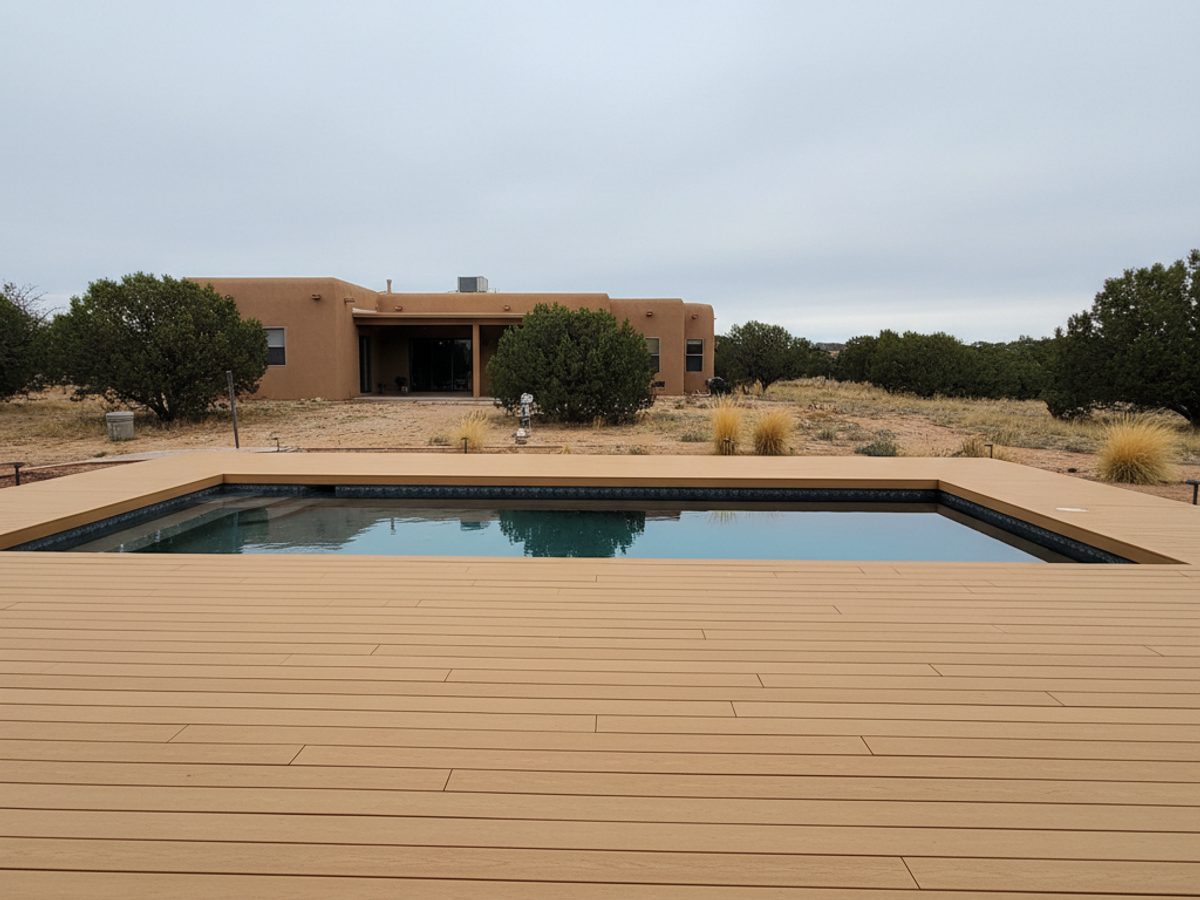
Ask a deck builder in most parts of the country when to schedule a build and the answer is usually just "avoid winter." In Chaparral it's a longer conversation. The caliche in the ground, the heat that shows up by June, and the monsoon storms that roll through most afternoons in July and August all push and pull on the schedule in different directions. Getting the timing right isn't about picking a pretty month. It changes how long footings take to cure, whether composite boards buckle later, and whether a stain job actually soaks into the wood or just sits on top and peels.
Caliche Decides When You Can Dig
Most lots around Chaparral, and across Doña Ana and Otero County generally, have a layer of caliche somewhere below the topsoil. It's calcium carbonate that's cemented the native sand into something close to soft rock. Sometimes it's six inches down, sometimes three feet. Dry, it will stop a hand auger cold and chew up a standard post-hole digger. We've had to switch to a breaker bar or a gas auger more than once on a footing that looked simple on paper.
The ground softens a little after a few good spring rains, usually sometime in April, and that's often the easiest window to dig footings all year. Dig too early and it's still rock hard. Wait until monsoon season starts in July and you've got the opposite problem, loose caliche chips and mud collapsing the hole walls faster than you can set forms.
Concrete Footings and the Summer Heat
A footing needs a few days of steady cure before it can carry post load, generally 3 to 5 days at minimum, longer if the weather's working against it. Pour concrete on a 100-plus degree day and the surface can flash cure and dry out before the concrete underneath has hydrated properly, which leaves it weaker than it looks and prone to surface cracking. That means wetting it down or covering it through the heat of the day, extra steps that spring and fall don't require. A 60 to 75 degree day in April or October lets a footing cure the way it's supposed to without babysitting it.
Wood and Composite Boards Move With the Temperature
Pressure-treated lumber comes off the truck still wet from the treatment process. Build with it in the full heat of July and it can shrink noticeably within the first month, opening up gaps at the butt joints that weren't there on install day. Composite decking has the opposite problem in some ways, it expands and contracts with temperature more than real wood does, and most manufacturers specify a gap, often around 3/16 of an inch between boards, to leave room for that movement. Install composite on a cold morning without accounting for how much it'll grow by August and you can end up with boards pressed tight against each other, buckling slightly where they meet. Mid-spring and mid-fall, when daytime highs sit in the 70s instead of swinging from 50 at night to 100 in the afternoon, give us a more predictable number to build the gaps around.
Staining and Sealing Need Their Own Window
Stain and sealant are meant to soak into the wood grain, not flash off the surface. Most products call for a surface temperature under roughly 90 degrees and out of direct full sun while they're applied, and they want a dry 24 to 48 hours on either side to cure properly. That rules out a lot of Chaparral's summer, both the heat of June and the humidity that comes with monsoon storms in July and August. Spring, before the monsoon starts, and late September into October, after it tapers off, are usually the better windows for staining and sealing work, whether it's a new deck or a resurfacing job on one that's faded out.
Wind in Spring, Water in Summer
Spring around here brings wind, sometimes strong enough to turn a straightforward day of staging lumber or hanging plastic sheeting for a stain job into a fight. Dust gets into wet finish, boards get knocked off sawhorses, pergola panels are harder to set when a gust catches them mid-lift. Then monsoon season shows up and brings the opposite problem. Afternoon downpours on ground that doesn't drain well, because that same caliche layer that's hard to dig through also doesn't let water percolate down, means flat lots can pond in low spots fast. A ledger board attached too low or a footing set without a drainage path in mind can end up sitting in standing water after a July storm. We plan grading and flashing around that before we ever set a post.
Winter, by contrast, tends to be one of the quieter and more workable stretches of the year here. Days often sit in the 50s and 60s, nights get cold but hard freezes are the exception rather than the rule, and the wind usually calms down compared to spring. Concrete cures slow and steady instead of flash-drying, and there's no monsoon storm cutting a work day short at 3 pm.
Permits Don't Slow Down for the Weather
Chaparral is unincorporated, split between Doña Ana and Otero County, so there's no city hall handling deck permits here, it goes through whichever county office the lot falls under. Setback from the property line gets checked against the lot survey, and inspections typically cover footing depth and the ledger attachment to the house before the decking goes down. On older additions, especially where a manufactured home has had work done on it over the years without much paperwork, that setback and attachment check matters more than usual. None of that paperwork moves any faster in March than it does in December, so starting the application during a slower month means the permit's already in hand by the time the ground is workable.
If you're weighing a new build, a repair, or just finally getting around to resealing a deck that's been baking out there for a few summers, timing it around the ground and the weather here makes a real difference in how it holds up. That's the kind of planning that goes into every job we take on at Champion Deck Company.